


Nobel Prize in Physiology or Medicine Awarded for Unlocking Peripheral Immune Tolerance Mechanisms
Author: Dmitry Drozd
The Nobel Assembly at Karolinska Institutet has awarded the 2025 Nobel Prize in Physiology or Medicine to Mary E. Brunkow, Fred Ramsdell, and Shimon Sakaguchi for their groundbreaking discoveries concerning peripheral immune tolerance—a crucial process that prevents the immune system from attacking the body’s own tissues, thereby guarding against autoimmune diseases.
Historical Background and Discovery Context
The phenomenon of immune tolerance, or the immune system’s ability to recognize and spare the body’s own cells while targeting harmful invaders, has been studied for over 75 years. Early work by Ray D. Owen in 1945 and later by Leslie Brent, Rupert Billingham, and Peter Medawar in the 1950s laid the foundation by showing that the immune system could be trained to accept foreign tissues under certain conditions. These insights led to the concept of central tolerance, where potentially self-reactive immune cells are eliminated during development in the thymus. Burnet and Medawar won the Nobel Prize in 1960 for “the discovery of acquired immune tolerance,” recognizing this fundamental mechanism.
However, central tolerance was understood to be incomplete—some self-reactive immune cells escape this process and circulate in the body, posing risks of autoimmune attacks. It was this gap in understanding that Mary Brunkow, Fred Ramsdell, and Shimon Sakaguchi addressed with their discoveries on peripheral tolerance.
Breakthrough Discoveries
In 1995, when many scientists believed immune tolerance depended solely on eliminating harmful cells centrally, Shimon Sakaguchi discovered a new class of immune cells—regulatory T cells (Tregs). These cells actively suppress immune responses against self-antigens and prevent autoimmune disease, revealing a sophisticated peripheral mechanism that monitors immune activity outside the thymus.
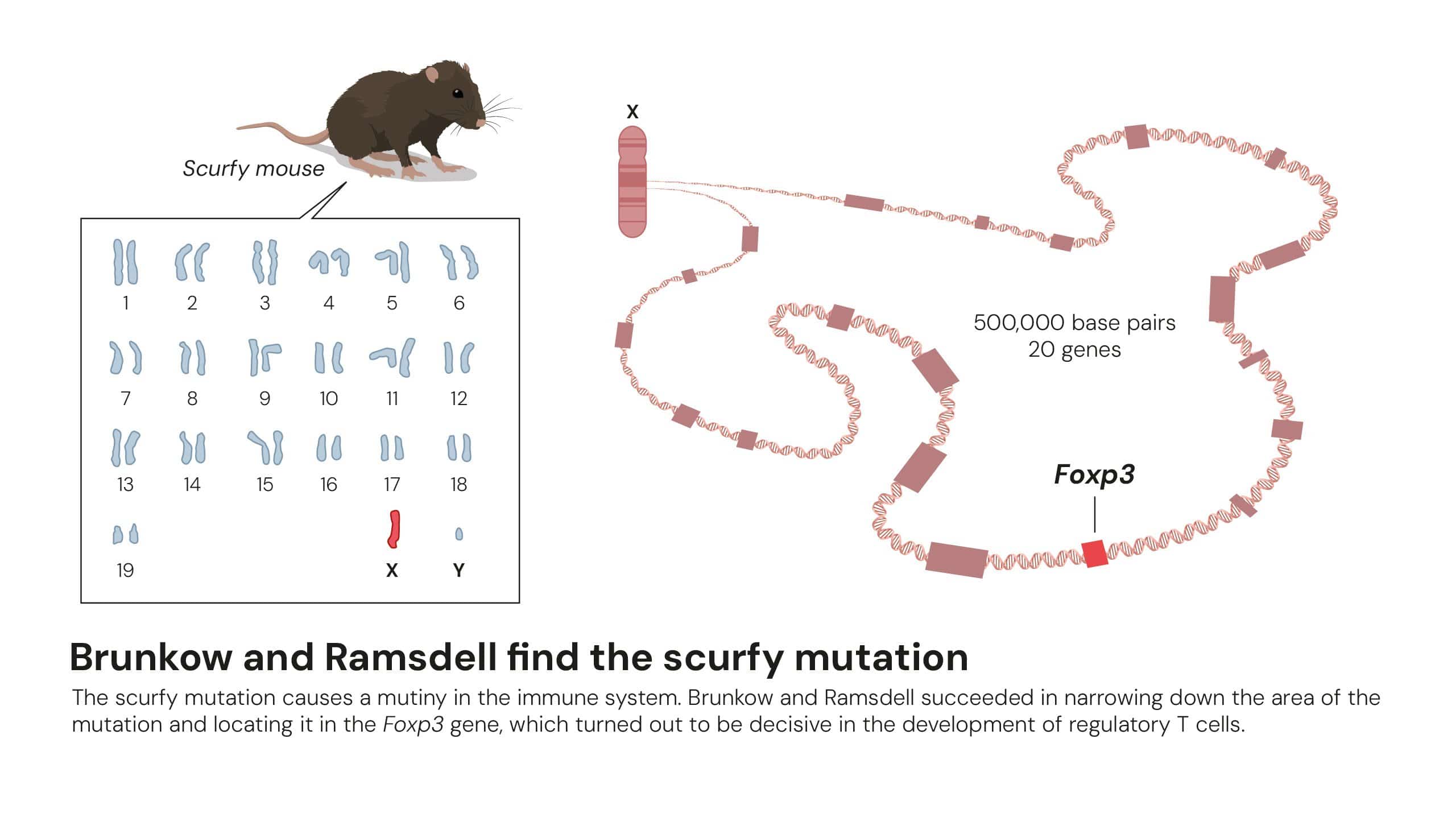
Mary Brunkow and Fred Ramsdell's complementary work in 2001 identified the Foxp3 gene mutation in mice that caused loss of regulatory T cell function and severe autoimmune disease susceptibility. They further linked the mutation of the human Foxp3 gene to the rare but devastating IPEX syndrome, affirming the gene’s essential role in immune regulation. Sakaguchi later demonstrated that Foxp3 governs the development of regulatory T cells, tying the genetic and cellular discoveries together into a comprehensive understanding of peripheral immune tolerance.
Why Peripheral Immune Tolerance Matters to Everyone
The immune system is extraordinarily powerful, protecting us daily from thousands of pathogens. Yet this power must be precisely controlled; otherwise, the immune system may attack the body’s own tissues, causing chronic, often debilitating autoimmune diseases such as type 1 diabetes, multiple sclerosis, and rheumatoid arthritis. Peripheral immune tolerance, mediated chiefly by regulatory T cells, acts as a critical brake to this immune activity, ensuring self-tolerance and immune balance.
Without this mechanism, common life-saving medical interventions such as organ transplants would provoke immune rejection, and many chronic autoimmune diseases would be untreatable. The laureates' discoveries not only deepen scientific understanding but have also sparked therapeutic innovations, including treatments that modulate regulatory T cells to combat cancer, prevent autoimmune disorders, and improve transplant outcomes. Several therapies targeting these pathways are currently in clinical trials, offering hope for patients worldwide.
Conclusion
Olle Kämpe, chair of the Nobel Committee, emphasized: “The work of Brunkow, Ramsdell, and Sakaguchi has been transformative, revealing the complex and essential mechanisms that maintain immune system balance. Their discoveries are foundational for modern immunology and therapeutic innovation.”
By illuminating the mechanisms by which the immune system protects the body without self-destruction, the 2025 Nobel Prize laureates have dramatically advanced both fundamental biology and medicine, offering hope for improved treatments for autoimmune diseases, cancer, and transplantation.
This award highlights the profound value of fundamental scientific research in unraveling complex biological systems that safeguard human health.
45 Views
Read more news on this topic:

Did you find an error or inaccuracy?We will consider your comments as soon as possible.