


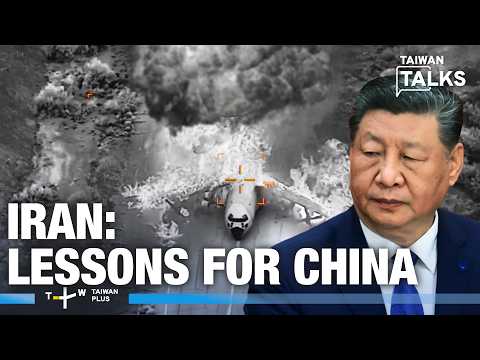
US Intelligence Report Adjusts Taiwan Timeline, Citing China's Preference for Coercion
Edited by: user3@asd.asd user3@asd.asd
The United States Intelligence Community (IC) issued a significant recalibration of geopolitical risk on March 18, 2026, concluding that Chinese leadership currently harbors no concrete plans for a 2027 invasion of Taiwan, nor operates under a fixed deadline for unification. This assessment, detailed in the 2026 Annual Threat Assessment of the US Intelligence Community, suggests that Beijing is strategically prioritizing non-kinetic methods, such as sustained political pressure and economic coercion, to achieve its long-term objective of absorbing the self-governing island.
This nuanced analysis directly contrasts with prior speculation, including predictions from Department of Defense officials in 2025 that had fixated on 2027 as a possible attack deadline. Despite the de-escalation of the immediate kinetic threat, the report cautions that the People's Liberation Army (PLA) is continuing to make steady but uneven progress in developing the necessary military capabilities for a cross-strait campaign. Chinese officials recognize that an amphibious invasion would be an extraordinarily complex undertaking, carrying a high probability of failure, particularly given the anticipated military intervention from the United States.
This recognition of high risk appears to underpin the current strategic patience, favoring a long-term approach that aligns with President Xi Jinping's January 1, 2026, declaration that the “reunification of our motherland, a trend of the times, is unstoppable.” In the immediate aftermath of the assessment's release, Beijing reacted swiftly to manage international perceptions. On March 19, 2026, China's Foreign Ministry spokesperson, Lin Jian, firmly asserted that the Taiwan issue remains an internal Chinese affair, urging the United States to exercise greater restraint and cease the inflation of the “China threat theory.”
This diplomatic push occurred concurrently with a tangible policy move on March 18, 2026, when China offered Taiwan energy stability as part of its broader reunification campaign, seeking to leverage ongoing global instability stemming from the Middle East war. The IC's findings underscore a strategic pivot toward sustained, gray-zone pressure, focusing on eroding Taiwan's political will and international standing through political meddling, economic leverage, and information operations short of open conflict throughout 2026.
The potential economic fallout from any conflict, including severe disruptions to technology supply chains and global market turmoil, remains a significant constraint factored into Beijing's calculus, regardless of the preferred non-forceful path. This ongoing strategic competition, characterized by persistent military intimidation and diplomatic maneuvering, requires continuous monitoring by regional security planners to prevent miscalculation and ensure deterrence remains robust against all contingencies.
67 Views
Sources
Deutsche Welle
Taipei Times
CNA
The Straits Times
Ministry of Foreign Affairs of the People's Republic of China
Asia Times
Read more news on this topic:



Did you find an error or inaccuracy?We will consider your comments as soon as possible.